Last updated November 18, 2026
Home Addition Contractor Troubleshooting: Common Problems and How to Fix Them
A door that won’t latch six months after your addition was “finished” isn’t a door problem. It’s often the first visible sign of a foundation or framing issue that a contractor hoped you wouldn’t connect to their work. We’ve walked through enough Paradise homes to know the pattern: the sticking door, the hairline crack above a window, the HVAC system that suddenly can’t keep up in July. None of these announce themselves loudly. They whisper. And homeowners usually can’t tell whether what they’re seeing is normal settling or a contractor error worth pursuing. This guide teaches you to read those signals correctly, document what you find, and know exactly who to call first.
Quick Answer
Most home addition problems fall into four buckets: structural movement, water intrusion, HVAC underperformance, and finish defects. The fix starts with documentation, not confrontation. Photograph and measure the defect, photograph a crack gauge or coin next to any crack for scale, and send written notice to your contractor before the warranty period closes. In Nevada, the climate makes thermal movement real, so some cracking is normal. The question is width, angle, and location. Hairline cracks under 1/16 inch in drywall corners are usually cosmetic. Cracks wider than 1/8 inch, diagonal cracks running from a door or window corner, and any crack that keeps growing after you’ve marked it deserve a professional inspection.
Table of Contents
- Reading Cracks: Normal Movement vs. Structural Concern
- How to Document a Defect So Your Warranty Claim Holds Up
- Why Your HVAC Can’t Keep Up After an Addition
- Water Intrusion: The Slowest, Most Expensive Problem
- Finish Defects: Doors, Drywall, and Flooring
- What a 365-Day Workmanship Promise Actually Requires
- When to Call Your Contractor, an Inspector, or an Attorney
Reading Cracks: Normal Movement vs. Structural Concern
Cracks are the most misunderstood signal in home addition troubleshooting. Southern Nevada swings from cool desert nights to 110-degree afternoons, and every material in your addition expands and contracts at a different rate. Drywall moves differently than wood framing, which moves differently than stucco. That movement produces cracks. Most are cosmetic and will reappear no matter how many times they’re patched. The question isn’t whether you have cracks, it’s which cracks matter.
Use this checklist to sort them:
- Width: Under 1/16 inch in drywall corners or along seams is typically thermal movement. Over 1/8 inch is worth a professional look.
- Angle: Vertical and horizontal cracks are usually less concerning. Diagonal cracks running from the corner of a door or window toward the ceiling are the ones to flag.
- Location: Cracks at inside corners where the addition meets the original house are common and often cosmetic. Cracks through the middle of a wall, or cracks that step along a brick or block mortar joint, deserve attention.
- Behavior: A crack that stays the same after you mark it with a pencil and date is probably settling. A crack that keeps growing month over month needs a structural inspection.
- Companions: A crack alone is one data point. A crack plus a door that won’t close plus a floor that feels sloped in one direction is a pattern.
In Paradise, we regularly see crack complaints peak in late September, after a summer of expansion and the first cool nights of fall contract the materials back. If your addition was finished in spring, that first fall is when the phone calls come in. Patching a drywall crack at month two of a 365-day workmanship window is reasonable. Watching a growing diagonal crack for six months and hoping it stops is not.
How to Document a Defect So Your Warranty Claim Holds Up
Contractors who want to avoid responsibility count on vague complaints. A homeowner calling to say “there’s a crack in the wall” gives the contractor room to respond with “that’s normal settling.” A homeowner who emails a dated photograph with a crack gauge showing 3/16 of an inch of separation, with a reference photo from the same spot taken four weeks earlier, gets a different response. Documentation is the difference between a claim that holds up and one that gets argued away. Here’s the process we recommend to every family we work with.
- Photograph with scale. Place a coin, a ruler, or a crack gauge next to the defect and shoot straight on. Take one wide shot showing the location in context and one close shot showing the measurement.
- Mark and date the crack. Draw a small pencil line at each end of the crack and write the date next to it. This gives you a baseline to measure whether it’s growing.
- Keep a simple log. Note the date, time, weather that day, and what you observed. Two sentences is enough.
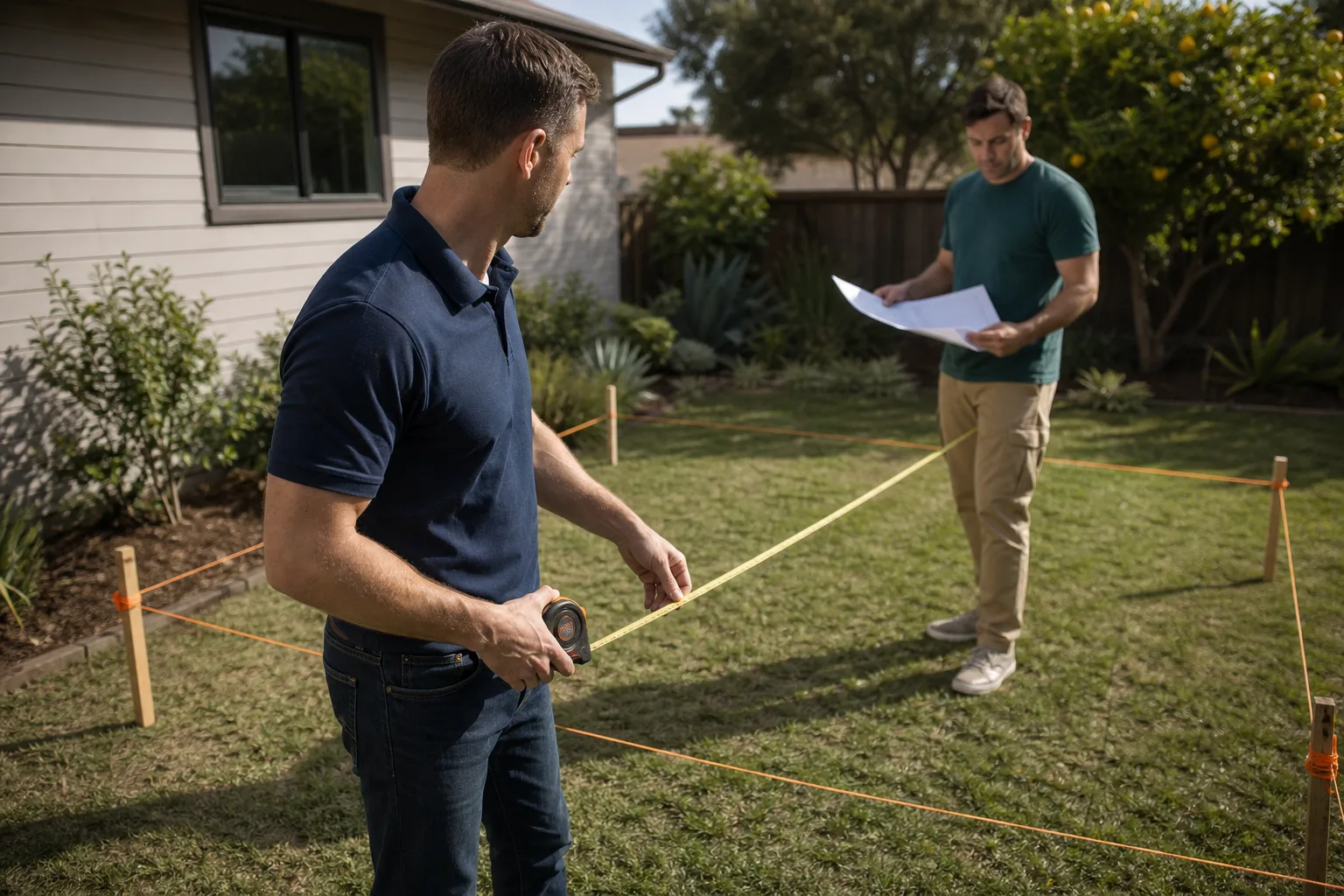
- Measure the door and window gaps. If a door isn’t latching, measure the gap at the top and bottom of the frame with a tape measure. Unequal gaps tell a story.
- Send written notice. Email or text your contractor with the photos, the measurements, and a clear ask: “We’d like this inspected within the warranty period.” Keep the reply.
- Save every receipt for any repair you’ve had to pay for because of the defect, including hotel stays or temporary fixes if the issue made the room unusable.
One Paradise homeowner we worked with on a garage conversion had a slow water stain in the ceiling corner. She sent three dated photos over five weeks, each with a measuring tape held against the spreading ring. When the contractor showed up, there was nothing to argue about. The leak was found and fixed in a single morning. That’s what good documentation does. It shortens the conversation.
Why Your HVAC Can’t Keep Up After an Addition
Almost every HVAC complaint after a home addition traces to duct sizing, not equipment failure. This surprises people. They assume the air conditioner broke or the unit was undersized. In truth, most contractors size AC equipment correctly for the new square footage but under-size or under-design the ductwork that delivers the air. Adding 400 square feet to a house doesn’t just require more cooling capacity. It requires a duct system that can push enough cubic feet per minute through the new space without starving the original rooms.
Here’s what goes wrong and how to spot it:
- The new room never gets cold: A single 6-inch flex duct running off the old trunk line can’t deliver enough air. The room needs its own properly sized supply and return.
- The original rooms get warmer: The new ductwork steals volume from the old system. If the kitchen and living room used to cool fine and now they don’t, the addition pulled the balance off.
- Static pressure is high: A qualified HVAC technician measures static pressure at the air handler. Readings above 0.5 inches of water column often signal undersized ducts.
- The unit short-cycles: If the AC turns on and off rapidly, it may be a refrigerant or thermostat problem. If it runs constantly but doesn’t reach setpoint, suspect duct design.
In Paradise, the summer heat makes this problem show up fast. An addition that cools acceptably in May will fail a July afternoon. If your contractor added a room without a proper Manual J load calculation and a Manual D duct design, ask for both. They’re standard documents, and any HVAC pro worth hiring produces them. If the original contractor won’t respond, an independent HVAC assessment will tell you whether the ductwork is the culprit and give you a written report you can hand back to them.
Water Intrusion: The Slowest, Most Expensive Problem
Water doesn’t announce itself. It shows up as a faint stain, a soft spot in drywall, a musty smell you can’t place. By the time a homeowner notices, the damage has often been spreading inside the wall for weeks. In an addition, water intrusion usually comes from three sources: a poorly flashed roof-to-wall junction where the new roof meets the old, a window or door installed without proper sill pan drainage, or stucco or siding that terminates too low against the soil.
What to check:
- Look for staining during the first rain. Any brown ring or bubbling paint on the interior wall or ceiling of the addition is an active leak.
- Check the exterior sealant at every window. A gap you could slide a credit card into is a problem.
- Confirm no stucco or siding touches the ground. There should be a visible gap of at least 4 inches between the bottom of the cladding and soil, with a weep screed in stucco systems.
- Walk the roof line mentally. The intersection of the new roof and the original roof is the single most common leak point in any addition.
If you find active water intrusion during the warranty period, report it in writing the same day. Continuing moisture damages more than just the finish. It can grow mold inside the wall cavity and rot framing, and it’s a strong basis for a warranty claim. Catch it in week one or week six and the repair is small. Catch it at month ten and you’re looking at drywall removal, insulation replacement, and possibly reframing.
Finish Defects: Doors, Drywall, and Flooring
Finish defects are the most visible and the most annoying, but they’re also the most straightforward to resolve. A door that rubs against the frame, drywall tape that’s peeling at the corners, baseboard that’s separated from the wall, or flooring that’s starting to cup: each of these is fixable and each is usually the contractor’s responsibility inside the first year.
- Doors and windows: A door that won’t latch, catch, or swing smoothly six months after install almost always means the frame moved or the hinge screws backed out. Check with a level and measure the gap at the top and bottom.
- Drywall tape lifting: Usually a sign the tape was applied over too much joint compound or without proper setting. Cosmetic, but it needs re-taping, not just spackle.
- Baseboard separation: Small gaps where baseboard pulls away from the wall are normal as wood seasons. Gaps wider than a credit card across an entire wall, though, might signal the floor is moving.
- Flooring cupping or lifting: Often tied to moisture. Find the moisture source before you fix the floor, or the fix won’t last.
The best contractors operate on a written price with no surprise line items, and the finish work is where that promise shows its value. If your contract says the door installation is covered, the fix is covered. If the contractor tries to bill you for a return visit on a warranty item, that’s a conversation worth having in writing.
What a 365-Day Workmanship Promise Actually Requires
A workmanship promise sounds simple until you need to use it. What should actually happen when you report a defect inside the coverage window? Here’s the sequence a contractor with a real 365-Day Done Right Promise follows. If your contractor’s response looks different, that’s useful information.
- Acknowledge in writing within a few business days. Not a phone call, not a text that disappears. A written reply that says who will come out and when.
- Schedule an inspection, not a repair. The first visit should be diagnostic. A contractor who shows up with a caulk gun and patches a crack without measuring it hasn’t diagnosed anything.
- Provide a written finding. One page stating what was inspected, what was found, and what the recommended fix is. If the finding is “normal settling,” say what was measured to conclude that.
- Repair at no cost if the defect traces to workmanship. If the finding points to materials or homeowner-caused damage, walk the homeowner through the evidence before proposing a paid repair.
- Re-inspect after repair. Confirm the fix held. For a crack or leak, a 30 to 60 day re-check makes sense.
- Document the visit. Photo of the completed repair, dated, in the homeowner’s file.
The 365-Day Done Right Promise backs every ADU, garage conversion, and home addition we build, and it sets the standard for what a warranty response should look like. The same is true across Cedarwell, our parent family of companies, where the Cedarwell Care Promise includes a photo of the clean-up before the crew leaves on every visit. A written promise with a documented response is the difference between a guarantee and a marketing line. Whether you’re in a Paradise addition or a garage conversion, ask specifically which defects are covered, for how long, and what the reporting process is.
When to Call Your Contractor, an Inspector, or an Attorney
The order matters. Most homeowners go straight to anger or straight to legal, both of which slow down the actual remedy. Here’s the sequence that resolves problems fastest:
Call your contractor first for: any defect that is visible, classified as workmanship under your contract, and inside the warranty period. Doors that don’t latch, drywall cracks that are growing, leaks, HVAC shortfalls, finish issues. Give them the documented report you built using the steps above and ask for an in-person inspection.
Call a third-party inspector if: your contractor won’t respond within two weeks of written notice, disputes what’s clearly a workmanship issue without measuring anything, or if you suspect a structural or safety concern. A licensed home inspector or structural engineer provides an independent written report that carries weight in any later negotiation. In Paradise and the broader Clark County area, many inspectors can be on-site within a week.
Call a construction attorney if: the contractor has failed to respond to a documented, legitimate warranty claim after written notice and independent inspection, and the repair cost is significant enough to justify the expense. Bring your documentation, your contract, the inspector’s report, and your repair estimates. Most attorneys will do a short consultation to tell you whether you have a case.
The order protects you. It shows that you tried to resolve the problem directly, that you verified the problem independently, and that the contractor’s non-response is the cause of escalation. Contractors and their insurers take documented claims seriously. A claim without that paper trail is easy to argue away.
Common Mistakes to Avoid
- Patching a growing crack before you document it. Once the drywall mud goes on, the evidence is gone. Photograph and measure first, then let the contractor patch it under warranty.
- Reporting a defect only by phone. Verbal complaints have no record and no date. Follow every call with an email the same day.
- Waiting past the warranty window. If your workmanship warranty is 365 days, the clock starts when the work is done, not when you finally notice the problem. Report early even if you think it might be nothing.
- Assuming an HVAC problem means the unit is broken. In our experience, most “my AC doesn’t work in the addition” calls trace to duct sizing and static pressure, not refrigerant. Get a duct design review before you replace equipment.
- Ignoring a small water stain in the summer. In the Nevada climate, water can dry fast, hide the source, and come back each winter. Every stain gets the same investigation, no exceptions.
- Hiring a contractor with no written warranty at all. A handshake and a “call us if anything comes up” is not a warranty. Get the coverage terms in the contract, including what counts as workmanship.
- Fixing the symptom, not the source. Caulking a leak you haven’t traced, or adjusting a door for the third time, wastes money. Find the source first.
When to Call a Professional
If you’re seeing any of the following, get a professional on-site: a crack wider than 1/8 inch, a diagonal crack growing month over month, water staining in an interior wall, a room that won’t hold setpoint despite the AC running, a door that stopped latching after the addition was finished, or a floor that has visibly sloped since completion. In Paradise, our team responds to these calls every week, and the pattern is consistent: catching a problem early saves thousands over catching it at month twelve. If you’d like a second opinion on what you’re seeing, Seedling ADU Builders Paradise offers free estimates in Paradise and can walk you through the diagnosis before anything changes. Call (833) 856-4236 and a live person will answer, day or night. A free written estimate for any recommended repair is standard. Background-checked technicians arrive in uniform, shoe covers and drop cloths on hand, and a photo of the clean-up before they leave.
Frequently Asked Questions

Cosmetic drywall crack repairs typically run $150 to $400. A structural engineer’s assessment in the Paradise area usually costs $400 to $900 depending on scope. Actual structural repair, if required, ranges widely from $2,000 for minor foundation work up to $15,000 or more for significant issues. Call (833) 856-4236 for an exact quote on your situation. Estimates are free.
No. In Nevada’s climate, thermal expansion and contraction regularly produce hairline cracks above doors and windows, and those are normal. A crack wider than 1/8 inch, one that keeps growing after you mark it, or one that runs diagonally from the door corner toward the ceiling is worth a professional inspection. Measure and photograph it before you assume either outcome.
If the HVAC shortfall traces to ductwork the contractor designed or installed, yes. That’s a workmanship issue and falls inside a proper warranty. If the equipment itself failed from an unrelated cause, it’s a manufacturer or HVAC subcontractor matter. The key document is the Manual J load calculation and Manual D duct design that should have been produced during design.
Timelines are set by the contract, not by law, in most cases. A well-written workmanship warranty specifies a response window, typically 3 to 5 business days for acknowledgment and 2 to 4 weeks for an on-site inspection. If your contract says nothing about response times, that’s a defect in the contract, not a right to wait indefinitely. Send written notice and track the days.
Not unilaterally. Payment terms are governed by your contract, and stopping payment can put you in breach even when the contractor is at fault. The correct move is written notice of the defect, documented evidence, and either a negotiated holdback agreement or legal advice from a construction attorney. Don’t withhold pay without consulting a professional first.
A home inspector is a good first step for most visible defects: leaks, cracks, HVAC issues, and finish problems. A structural engineer is the right call when the concern is foundation, framing, or load-bearing, or when the crack pattern suggests real movement beyond thermal expansion. If you’re in Paradise and not sure which one you need, call (833) 856-4236. We can help you tell the difference before you pay for the wrong inspection.
The Bottom Line
Problems with a home addition almost never show up where you expect them. A losing door, a faint stain, a room that won’t get cold in July, a crack above a window: each of these is a signal, not an isolated annoyance. The homeowners who get the fastest fixes are the ones who photograph and measure first, put the complaint in writing, and call their contractor before the warranty window closes. If the contractor doesn’t respond, third-party inspection is the logical next step. If there’s still no response and the stakes are high, an attorney. Choose a contractor whose workmanship promise is written and whose response is documented, and the entire troubleshooting process gets shorter. Seedling ADU Builders Paradise backs every home addition with the 365-Day Done Right Promise, provides a written price before any work begins, and answers the phone with a live person 24/7. That’s just what we believe a contractor relationship should look like. Call (833) 856-4236 for a free estimate in Paradise, and get a written answer to the question you’ve been staring at in your home.
Written by the team at Seedling ADU Builders Paradise.