Last updated November 18, 2026
How Long Does ADU Builders Take? Timelines and What to Expect
In Clark County, the design and permit approval phase for a detached ADU averages 8 – 14 weeks before a single tool is picked up. That number surprises almost every homeowner who calls us. Most people plan their budget around construction, then discover that the longest stretch of the project happens while nothing is being built at all. We’ve watched families sign a contract expecting a finished unit by summer and end up paying rent and a mortgage into the fall because nobody mapped the queue. This guide breaks the full timeline into five linked phases, shows which one dominates, and explains what a Paradise homeowner can do about it.
Quick Answer
A typical ADU in Paradise takes 8 to 14 months from first design meeting to final inspection, with construction itself accounting for only 4 to 7 months of that total. The design and permit approval phases usually run 3 to 5 months combined, and in Clark County they are the most unpredictable part of the schedule. Garage conversions move faster than detached units because they often skip separate utility trenching and foundation work.
Table of Contents
- The Five Phases of an ADU Timeline
- Why the Clark County Permit Queue Dominates the Schedule
- Attached vs. Detached vs. Garage Conversion: Timeline Differences
- What to Do While You Wait for Permits
- What a Real Milestone Schedule Looks Like in a Contract
- How a Written Price Locks the Timeline as Well as the Cost
- What Happens During Construction
- Final Inspection and Certificate of Occupancy
The Five Phases of an ADU Timeline
Every ADU project moves through the same five phases. Understanding each one tells you where your weeks actually go and where a delay is likely to originate. In our experience building across Paradise, the phases almost never overlap the way homeowners expect.
- Initial design (3 – 6 weeks). Site survey, lot coverage review, floor plan selection, and engineering for wind and seismic loads. If you choose a prefab model from a brand like Dvele or Plant Prefab, this phase is shorter because the shell is already engineered. Fully custom designs take longer.
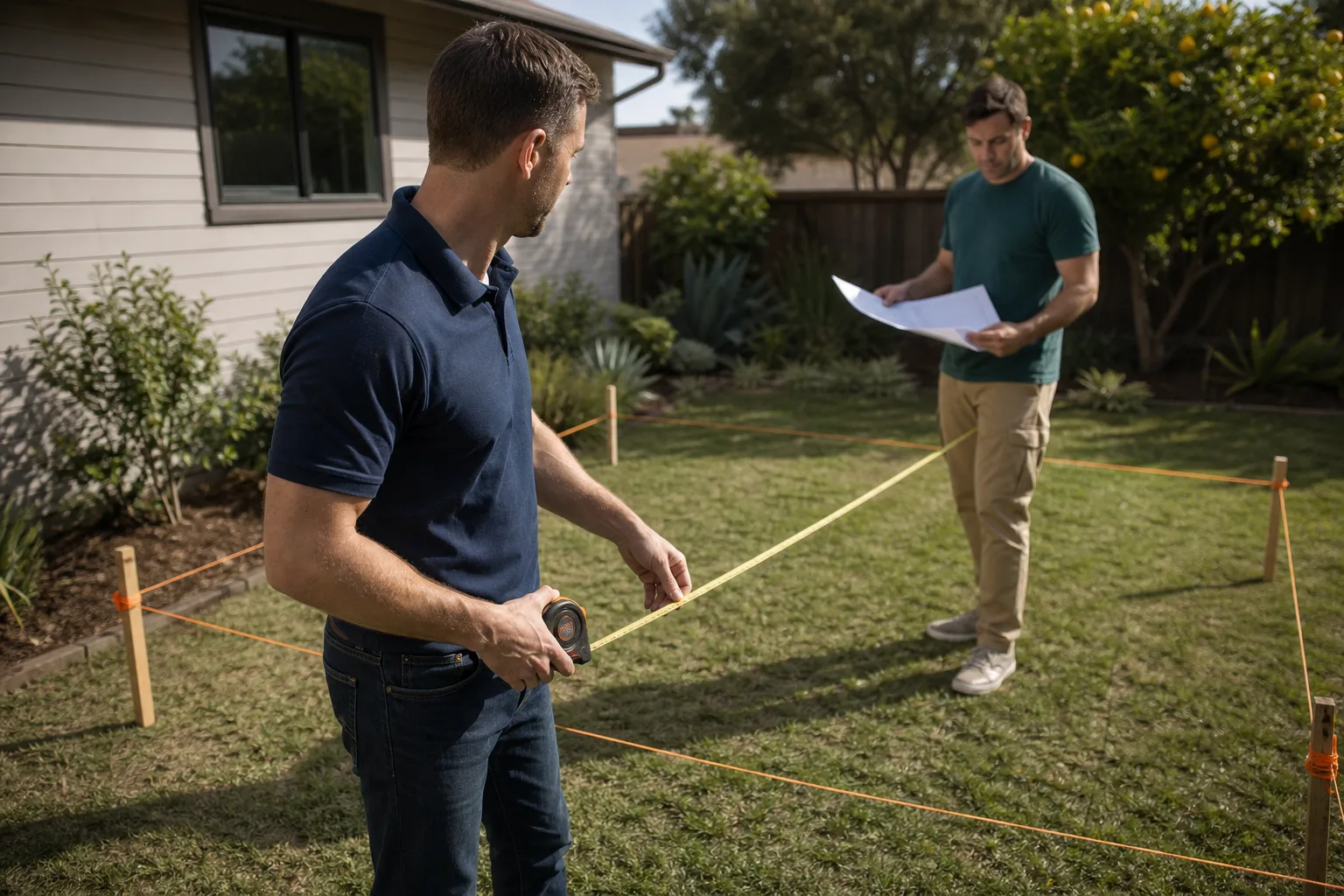
- Permit submission (1 – 2 weeks). Assembling the submittal packet: site plan, structural drawings, Title 24 energy calculations, and a grading plan if the lot slopes. Missing documents restart the clock, so accuracy here matters more than speed.
- Permit approval (6 – 14 weeks in Clark County). Review by planning, building, and fire. This is the dominant variable, and it’s the phase most timelines bury in a footnote.
- Construction (4 – 7 months). Site prep, foundation, utility trenching, shell, roofing, MEP rough-in, insulation, drywall, finishes. Prefab units compress the shell portion considerably.
- Final inspection and CO (1 – 3 weeks). Building, electrical, plumbing, and fire sign-offs, then the certificate of occupancy that makes the unit legal to live in.
Add those ranges and you’ll see why 8 to 14 months is realistic. The gap between the low and high end almost always comes from phases two and three, not from how fast the crew builds.
Why the Clark County Permit Queue Dominates the Schedule
Clark County reviews thousands of residential applications a year, and ADU submittals sit in the same queue as remodels, pools, and new home construction. Review time fluctuates with seasonal volume and staffing. In practice, we see cleaner submittals clear in 6 to 8 weeks while incomplete ones can stretch past 12. The difference is rarely the project itself. It’s the quality of the paperwork.
Three factors push a Paradise application toward the long end of the range:
- Lot coverage questions. Many Paradise lots have existing accessory structures, and the reviewer will ask for a clear site plan showing total impervious coverage. Vague drawings get flagged and returned.
- Utility connections. A detached ADU needs its own sewer or septic plan. If the home is on septic, the county requires proof of capacity, and that review adds weeks.
- Fire access and setbacks. Corner lots or narrow side yards can trigger a fire department review that homeowners don’t anticipate.
The single best way to shorten this phase is to submit a complete package the first time. A designer who has submitted ADUs in Clark County before knows what the reviewers ask for and builds it in from the start. That alone can save a month.
Attached vs. Detached vs. Garage Conversion: Timeline Differences
The type of ADU you choose changes both the review path and the build duration. Here’s how the three common configurations compare on Paradise lots.
Detached ADU
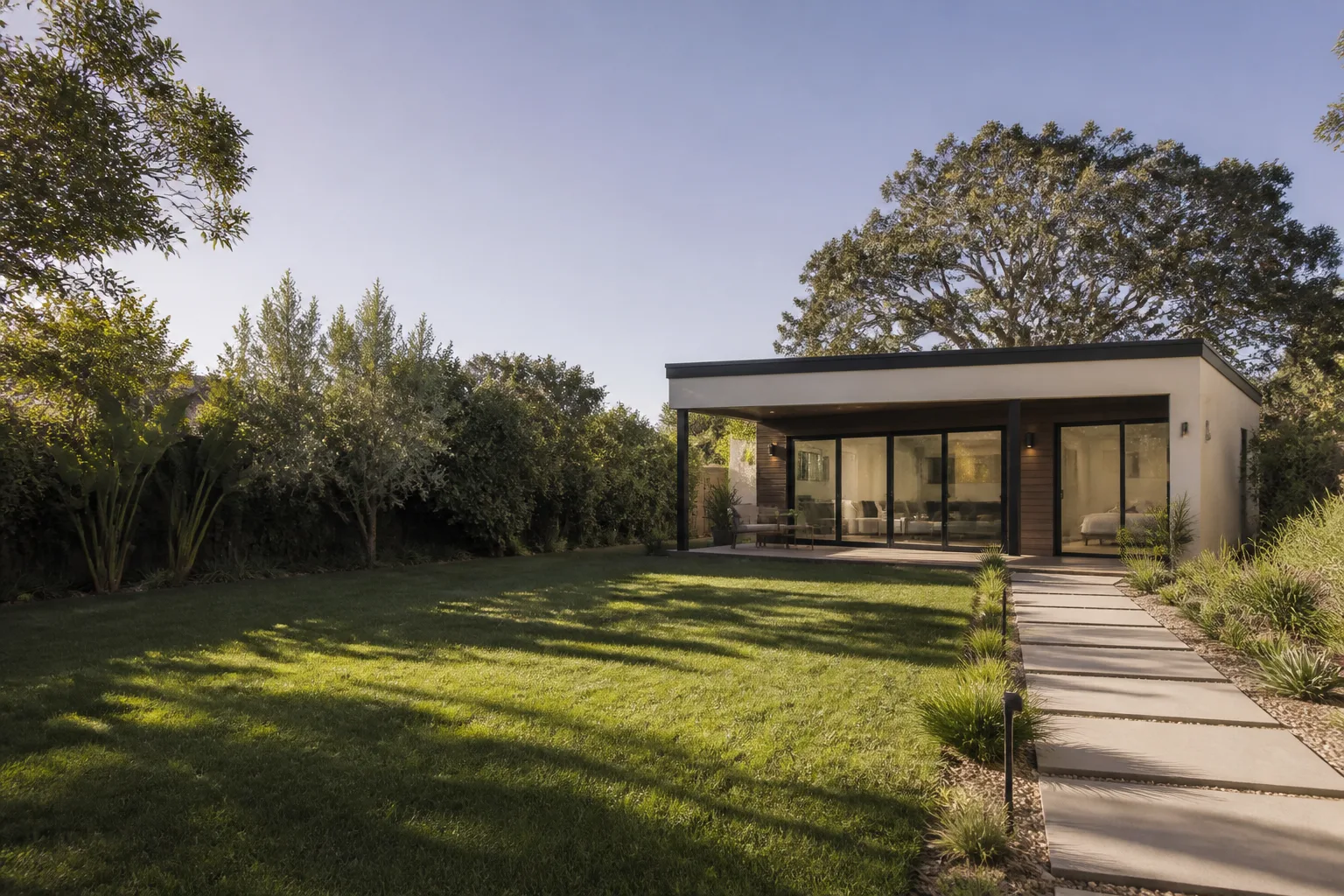
Longest timeline, typically 10 to 14 months. You’re building a new structure from the ground up, which means separate utility trenching, a new foundation, and full code compliance for a standalone dwelling. Prefab or modular options from brands like Mighty Buildings and Boxabl compress the construction phase because the shell arrives pre-built, but site work and utility connections still take time. The advantage is a fully private home on your lot with no shared walls.
Attached ADU
Middle range, usually 8 to 12 months. An attached unit shares a wall, foundation, and sometimes utilities with the main house, which reduces scope. The complication is tying new construction into an existing structure: the engineering has to account for how the two buildings move, and inspections get more detailed where the two systems meet. On Paradise lots with a wide side yard, this is often the most efficient configuration.
Garage conversion
Fastest, typically 6 to 9 months, and often the most affordable. The structure and foundation already exist, so you skip site prep and trenching. The trade-offs are specific: many garages have a slab that needs leveling, a ceiling height that limits insulation, and a door opening that needs framing. If your garage shares a wall with the house, fire separation between the two becomes a review point. For a homeowner who wants a livable unit without the full footprint of a new build, a garage conversion contractor in Paradise can move considerably faster than a ground-up build.
What to Do While You Wait for Permits
The permit wait feels like dead time. It isn’t. Several construction-phase tasks can be planned, ordered, or completed during review, and doing them early is what separates a 10-month project from a 14-month one.
- Lock your material selections. Roofing, siding (we often recommend James Hardie for its durability in desert conditions), flooring, and fixtures. Ordering lead-time items during permit review means they arrive when the crew needs them, not three weeks later.
- Confirm your prefab order slot. If you’re building with a modular brand like Dvele or Plant Prefab, factory slots fill up. Reserving your production window during permit review prevents a gap between approval and delivery.
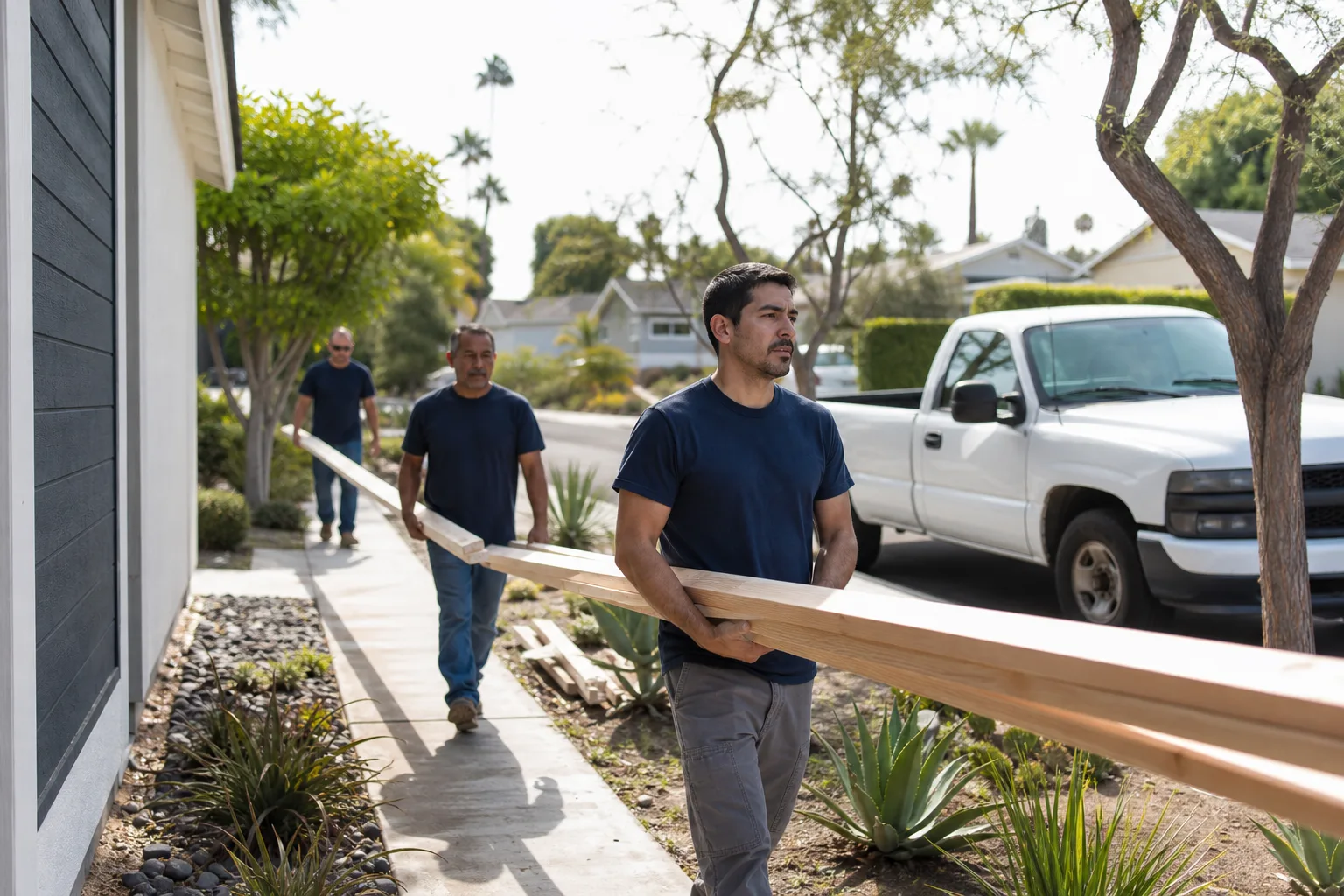
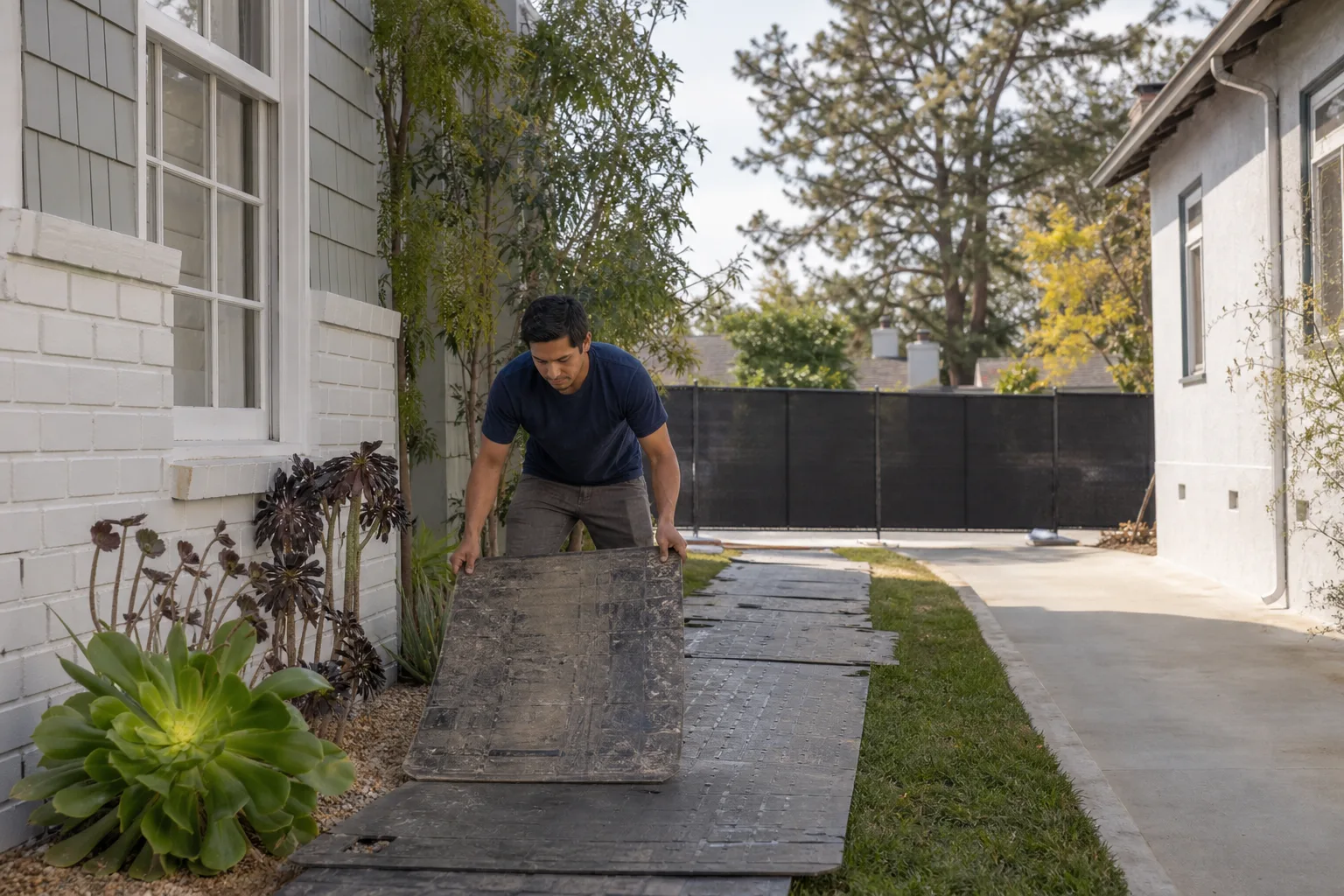
- Clear site access. Decide where the crew will stage materials, where the dumpster goes, and how equipment reaches the backyard. On older Paradise lots with narrow side yards, this planning is essential.
- Plan for household disruption. If you’re converting a garage, decide where the stored items go and how the family will use the space during construction. We walk every family through this before work begins.
- Coordinate utility shutoffs. If any work touches the main electrical panel or gas line, schedule the disconnect with your utility ahead of time.
Every one of these tasks can be done without a permit in hand. Doing them during the wait is how smart homeowners turn a 14-month project into a 10-month one.
What a Real Milestone Schedule Looks Like in a Contract
A legitimate construction contract for an ADU should have specific dates and deliverables, not vague ranges. Vague language like “approximately 3 – 4 months” for construction tells you the builder hasn’t planned the work, or is protecting themselves from accountability. Neither is good for you.
Here’s what a milestone schedule should contain:
- Design deliverable dates. When the site plan, structural drawings, and Title 24 calculations will be ready for your review, with a specific date.
- Permit submission date. The day the packet goes to Clark County, stated in writing.
- Construction start date. Tied to permit issuance, with a clear understanding of what “start” means (mobilization, site prep, or first concrete).
- Phase milestones. Dates for foundation completion, framing inspection, rough-in inspection, drywall, and final. Each tied to an inspection, not a calendar estimate.
- Substantial completion date. The date the unit is ready for final inspection, stated as a target.
- Change-order terms. How changes are priced, how they affect the schedule, and who signs off.
When a schedule is written this way, both sides know exactly what’s expected. The builder can’t hide behind a range, and you can’t be surprised when a “3-month build” turns into 6 without warning.
How a Written Price Locks the Timeline as Well as the Cost
A written, pre-work price isn’t just about money. It’s about schedule integrity. When the price is fixed before work starts, every line item has a defined scope, and a defined scope means the crew knows exactly what to build. Ambiguous scopes are where delays hide: a “to be determined” on siding or a unit-mix decision made mid-build pushes the schedule back every time.
Seedling ADU Builders Paradise gives every family a written price before any work begins, with no surprise line items added after crews arrive. That document does two things: it locks the cost, and it locks the scope of each phase so the milestone schedule holds. When you know what’s being built, the crew doesn’t lose days waiting on a decision.
The connection runs both ways. A fixed schedule without a fixed price means change orders that reset the calendar. A fixed price without a fixed schedule means the builder has no accountability for time. You want both in writing. That’s the standard we hold every Paradise project to, and it’s why we can commit to a milestone schedule at signing.
If you’re still weighing whether an ADU is right for your Paradise property, our guide to ADU builders in Paradise covers lot eligibility, financing, and what to expect on the design side.
What Happens During Construction
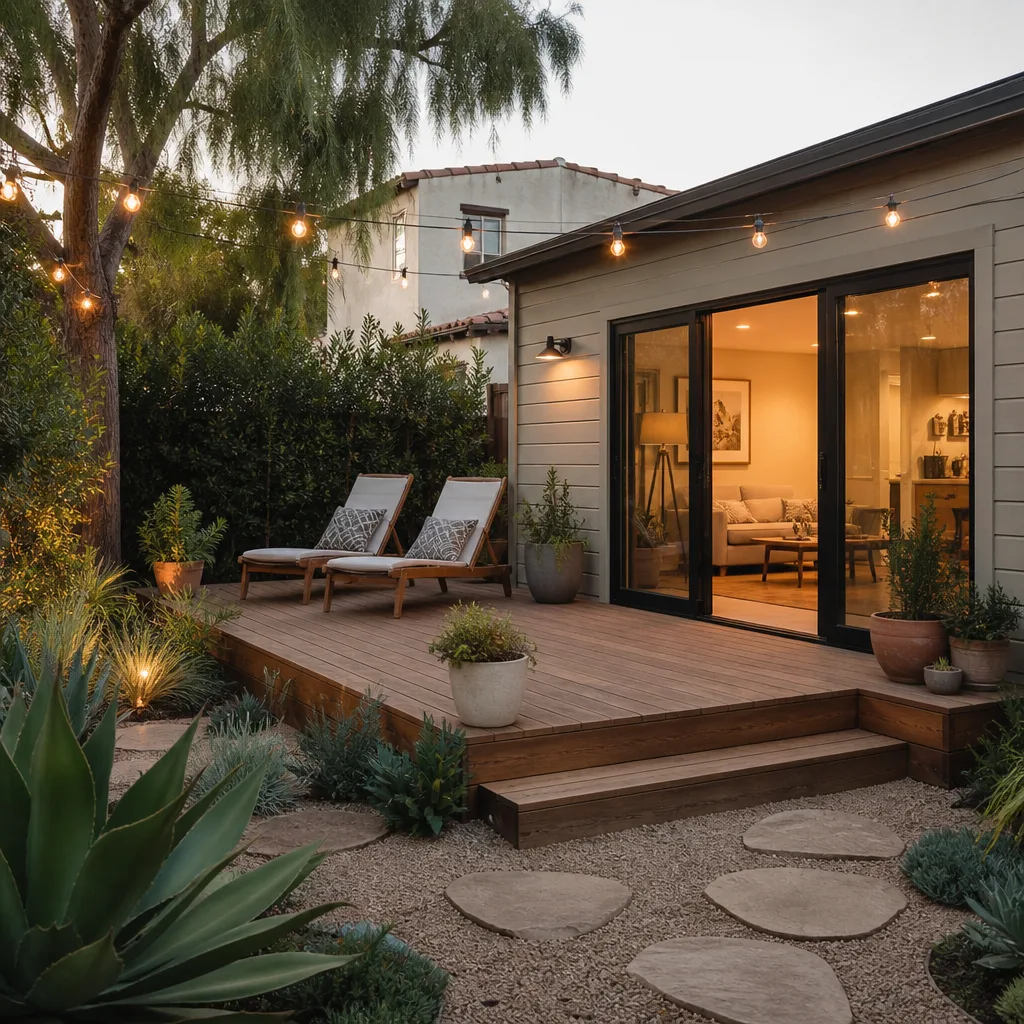
Construction is the most visible phase, and on a typical ADU it runs 4 to 7 months for an attached or detached unit, less for a garage conversion. The sequence matters because each inspection unlocks the next step.
- Site prep and foundation (2 – 4 weeks). Excavation, footing, slab or stem wall. Concrete cure time is fixed and can’t be rushed.
- Utility trenching (1 – 2 weeks). Water, sewer, gas, and electrical run to the unit. Detached ADUs need this; attached units often share existing runs.
- Framing (2 – 3 weeks). Walls, roof, and sheathing. For a prefab or modular ADU, the shell arrives pre-framed, which can compress this phase to days.
- Rough-in inspections (1 – 2 weeks). Electrical, plumbing, and HVAC are inspected before walls close.
- Insulation and drywall (2 – 3 weeks). Insulation, drywall hang, tape, and texture.
- Finishes (4 – 6 weeks). Flooring, cabinetry, fixtures, paint, and exterior trim. This phase can run longer if selections weren’t locked during permit review.
- Final inspection and CO (1 – 3 weeks). All trades sign off, then the county issues the certificate of occupancy.
Weather in the Las Vegas Valley affects construction less than in most of the country, but summer heat matters: concrete pours and roofing are scheduled around early morning to protect crew safety and material quality. That’s a scheduling detail we build in from day one.
Final Inspection and Certificate of Occupancy
The CO is the document that makes your ADU legal to occupy. Building, electrical, plumbing, and fire inspectors each sign off on their portion, then the county issues the certificate. On a clean project this takes one to three weeks from substantial completion.
Most delays at this phase come from punch-list items: a missing outlet cover, a smoke detector in the wrong location, a handrail that’s slightly out of code. We walk the unit against the inspection checklist before calling for review, which is how the final phase stays short. A garage conversion often moves through faster here because there’s less new work to inspect.
Once the CO is in hand, the unit is a legal dwelling. It can be rented, occupied by family, or used as a home office or guest suite. This is the moment the ADU becomes a “new home on your lot,” and it’s worth planning a small celebration around it.
Common Mistakes to Avoid
- Planning the budget around construction only. Design and permit phases have real costs (drawings, engineering, county fees) and they happen months before work starts. Budget for all five phases, not just the visible one.
- Choosing a builder who quotes a range instead of a schedule. “About 3 – 4 months” for construction tells you nothing about the design and permit phases. Ask for a phase-by-phase milestone schedule in writing.
- Skipping the site survey. Paradise lots vary in slope, setback, and existing coverage. A skipped survey means a redesign mid-permit, which adds 4 – 8 weeks.
- Not locking material selections before permit submission. Late decisions on siding, flooring, or fixtures push the finishes phase and can trigger a change order that resets the timeline.
- Assuming garage conversions are as simple as they look. Older garages often have slab issues, ceiling height limits, and fire separation requirements. Walking through these with a contractor early prevents mid-project surprises.
- Ignoring the septic question on rural Paradise parcels. If your home is on septic, the county will require a capacity review before an ADU is approved, and that adds time.
- Forgetting the household disruption plan. Construction near bedrooms and during school hours needs coordination. Walking the plan with your crew before work starts keeps the family’s routine intact.
When to Call a Professional
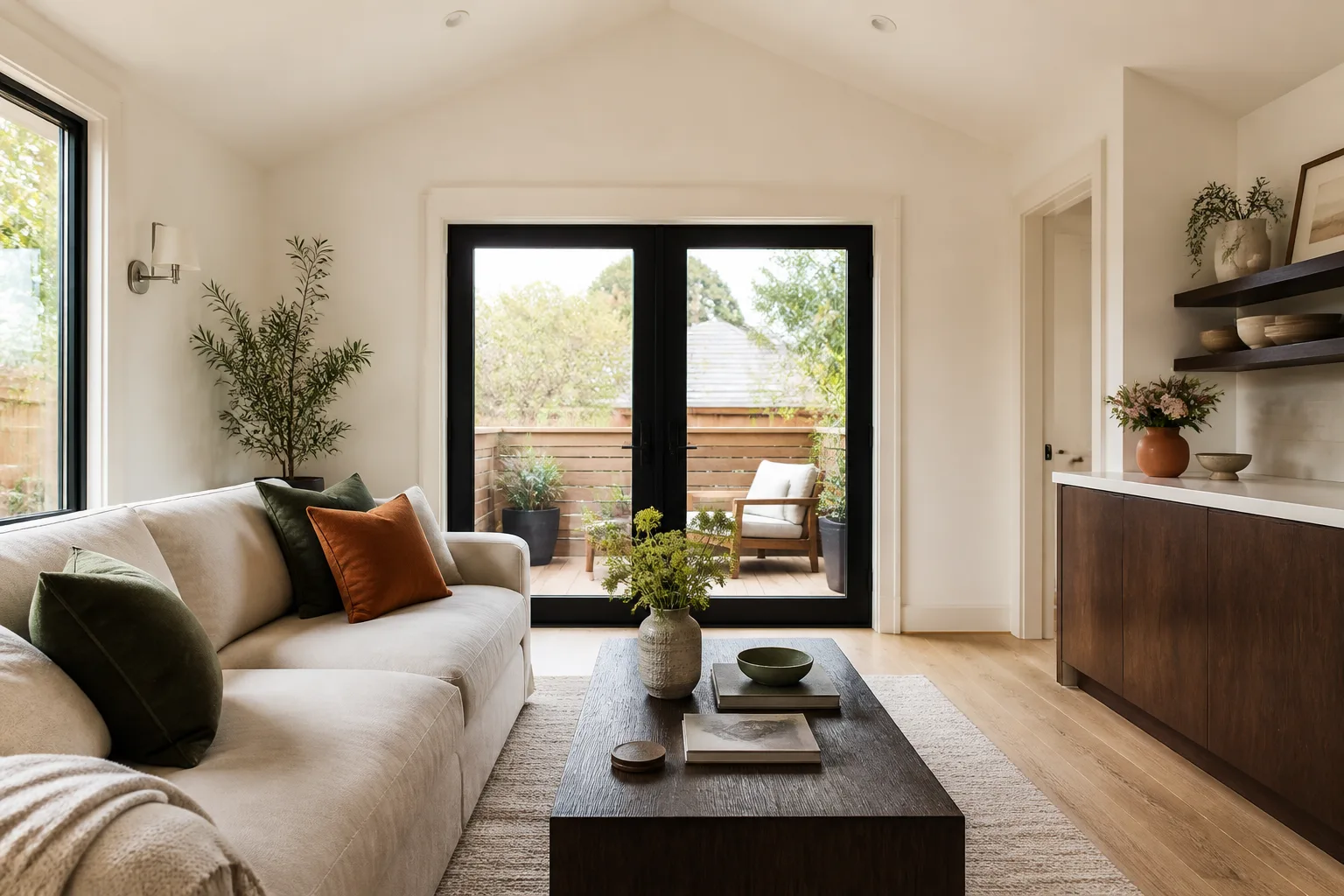
Call a professional ADU builder as soon as you’re considering an ADU, not after you’ve picked a model. A lot review takes an hour and can save months of wasted work. Reach out if any of these apply: your lot is on septic and you’re unsure about capacity, you’re converting a garage and want a realistic scope before committing, you want a fixed written price so you can compare against two other bids honestly, or you’ve already received a quote and want a second opinion on whether the timeline is realistic.
Seedling ADU Builders Paradise offers free estimates in Paradise – call (833) 856-4236. Every project starts with a written price and a phase-by-phase milestone schedule, so you know what will happen, when, and how much it will cost before any tool is picked up. Background-checked, uniformed technicians handle the work, shoe covers and drop cloths protect your floors, and a live person answers the phone 24/7 throughout the build.
Frequently Asked Questions
A Paradise ADU typically takes 8 to 14 months from first design meeting to certificate of occupancy, depending on the type. Garage conversions usually land at the low end at 6 to 9 months, attached ADUs at 8 to 12 months, and detached ADUs at 10 to 14 months. The Clark County permit review phase, which runs 6 to 14 weeks, is the largest source of variation. Call (833) 856-4236 for a timeline specific to your lot.
Clark County reviews ADU applications in the same queue as all other residential permits, and review time fluctuates with staffing and seasonal volume. Incomplete submittals are returned and restart the clock, which is the most common cause of delays past 12 weeks. Submitting a complete packet with site plan, structural drawings, and Title 24 calculations the first time is the single best way to stay at the fast end of the range. Our free estimate includes a review of what your specific lot will require.
Yes, but the county requires proof that the existing septic has capacity for the additional dwelling, and that review adds 3 to 6 weeks to the permit phase. Dry wells and leach fields are common on older Paradise parcels, and the septic capacity check usually happens before planning approval. Getting the septic review started early is the main thing homeowners can do to avoid a delay here.
Not when the price is written before work begins. Seedling ADU Builders Paradise gives every family a fixed written price before any tool is picked up, with no surprise line items added after crews arrive. The only exceptions are changes you explicitly request during the build, which are priced and signed off before work proceeds. A written price also locks the scope of each phase, which keeps the milestone schedule on track.
Construction itself runs 4 to 7 months for a detached or attached ADU and 3 to 5 months for a garage conversion. The phase breaks down into site prep, framing, rough-in inspections, insulation and drywall, finishes, and final inspection. Prefab shells from brands like Mighty Buildings and Boxabl can compress the framing window because the structure arrives pre-built, but utility work and finishes still take the same time.
Garage conversions still require permits, but the submittal is leaner because the structure already exists. You skip site prep, foundation, and utility trenching, which is why the timeline drops to 6 to 9 months. The review focuses on fire separation from the main house, ceiling height, egress, and insulation. A Paradise garage conversion contractor who has shepherded conversions through Clark County can tell you exactly what your garage needs before you commit.
The Bottom Line
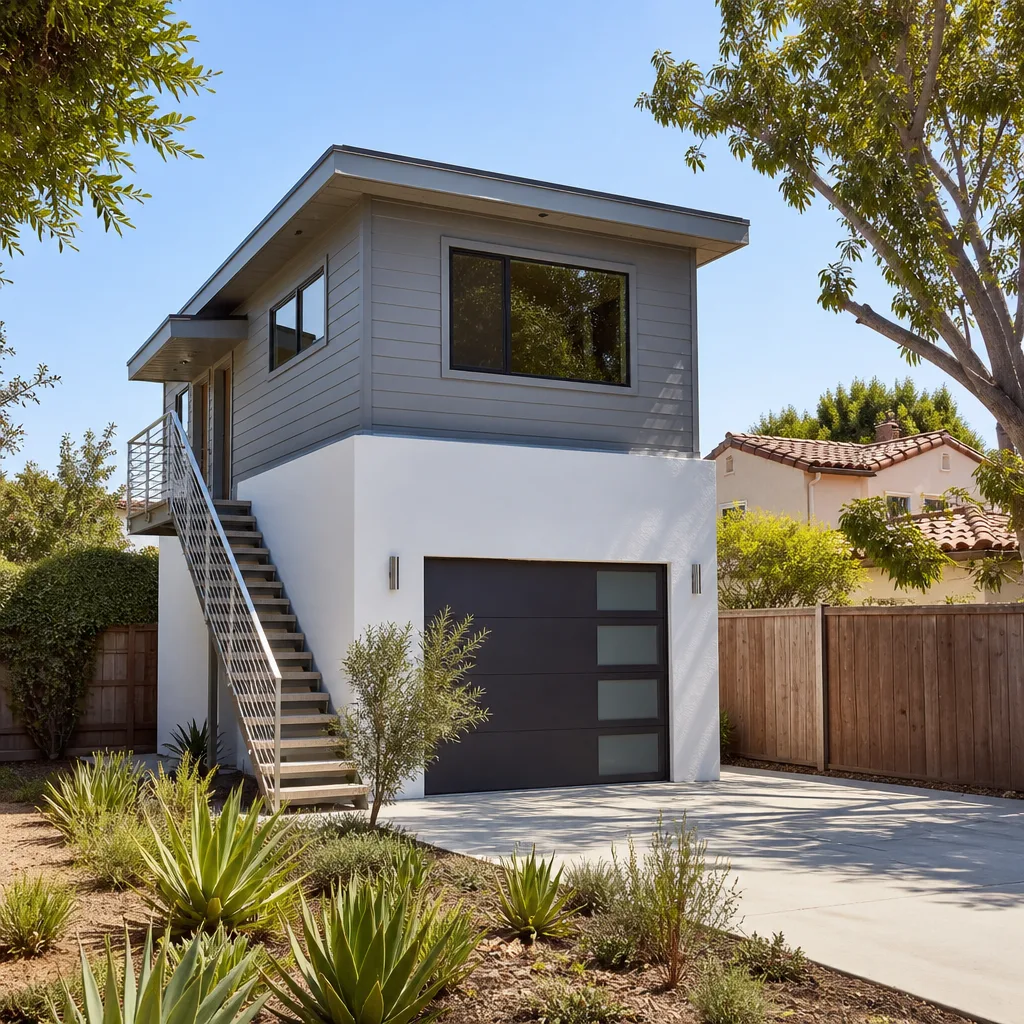
An ADU timeline is a chain of five linked phases, and the longest link is almost always permit approval, not construction. Plan for 8 to 14 months total on a Paradise project, budget for design and permit costs during the wait, and use that wait to lock material selections and prefab order slots. Insurance against schedule overruns comes in two forms: a written, pre-work price that fixes the scope of every phase, and a milestone schedule with specific dates in the contract. If you’re considering an ADU, home addition, or garage conversion in Paradise, get the timeline on paper before you sign anything. That single document is what separates a well-planned project from one that costs you two housing payments at once. For more on how Seedling ADU Builders Paradise handles the process, start with our Seedling ADU Builders Paradise home page or our home addition contractor in Paradise guide.
Written by the team at Seedling ADU Builders Paradise.