Last updated November 18, 2026
ADU Emergency Preparedness Guide for Paradise Homes
Here’s a scenario most ADU owners never rehearse: it’s 2 a.m., the ADU occupant smells gas, and nobody in either building knows where the shutoff is or who to call first. The main house sleeps through it. The ADU tenant calls the homeowner’s cell and gets voicemail. Four minutes pass. When an ADU goes up on a Paradise lot, your household suddenly runs two occupied buildings under one utility meter and one shared emergency plan that was probably never written down. In our experience, this is the single most overlooked part of adding a second home. This guide walks you through the shutoff map, the detectors, the two-person evacuation protocol, and the one-page card every ADU occupant should carry.
Quick Answer
An ADU emergency plan needs four things: a labeled and photographed utility shutoff map covering both buildings, interconnected smoke and CO detectors tested annually, a two-structure communication and evacuation protocol agreed to by every occupant, and a one-page emergency information card kept in each unit. In Paradise, add extreme heat outage planning and a wildfire evacuation route specific to your lot. Most families get the ADU built and never have the conversation until the night it matters.
Table of Contents
- 1. Building the Utility Shutoff Map
- 2. Paradise-Specific Hazards You’re Planning For
- 3. The Two-Structure Evacuation Plan
- 4. Smoke, CO, and Extreme-Heat Alerts
- 5. The Emergency Information Card
- 6. Planning for Elderly or Mobility-Limited ADU Residents
- 7. The Annual Emergency Drill
- Common Mistakes to Avoid
Building the Utility Shutoff Map
When you build an ADU, whether it’s a prefab unit from Dvele or Mighty Buildings or a garage conversion, the new structure typically ties into the main home’s utility infrastructure. That means the gas shutoff, water main, and electrical disconnect are usually shared, and they almost always live on the main house side. The ADU occupant has no idea where any of them are.
Here’s how to fix that. Walk your entire lot with a clipboard and photograph each of the following while it’s daylight and the power is on:
- Main gas shutoff – usually at the meter or where the service enters the home. Photograph it with a hand or a marker showing which way to turn.
- Water main – often at the street or in a front-yard box. Photograph the valve position and the tool you keep nearby.
- Electrical disconnect – the main breaker in the panel, plus any sub-panel serving the ADU if it has its own.
- ADU-specific shutoffs – if your ADU has an isolated water heater shutoff or its own sub-panel, photograph those separately.
- A labeled photo of each with a caption like “MAIN GAS – turn clockwise to close.”
Print two copies. Tape one inside each unit’s utility closet or kitchen cabinet door. Then add the photos to a shared document every occupant can open on their phone. A plumber or electrician can label the actual valves with a paint marker at your next service call for a small add-on charge, which is often the most reliable step you can take. If you’ve just finished a garage conversion in Paradise, this labeling should happen before the final walkthrough.
Paradise-Specific Hazards You’re Planning For
Paradise and the broader Henderson corridor sit in a climate that throws three distinct emergencies at homeowners: extreme heat, flash flooding, and wildland-urban interface fire risk. Each one affects an ADU differently than it affects a main house, mostly because the ADU occupant may be asleep when the main house is awake, or out working when the main house is home.
Extreme heat power outages. A summer outage in Paradise can push the interior of an unshaded ADU past 100°F within an hour. If your ADU houses an elderly parent or a young tenant, plan a heat refuge: the main house if it has backup cooling, or a designated neighbor’s home or cooling center if not. Keep a battery-powered or rechargeable fan and a case of water in the ADU itself, not in the main garage.
Flash flood risk in low-lying areas. Certain Paradise streets and washes flood quickly during monsoon season. If your lot slopes toward a wash or sits near the valley floor, keep sandbags staged and choose an evacuation route that doesn’t cross low ground. Note it on your shared document.
Wildland-urban interface fire. Parts of Paradise and the foothills toward Henderson sit in WUI zones. Defensible space planning applies to the whole lot, including the ADU’s immediate perimeter. Clear dead vegetation within 30 feet of both structures and confirm your evacuation route leaves the neighborhood in one agreed direction, not two.
The Two-Structure Evacuation Plan
Most ADU households have never had a single conversation about what happens if both units have to leave in five minutes. Here’s a protocol that works:
- Set a primary meeting point on the property – typically the front sidewalk or the mailbox – and a backup meeting point two blocks away.
- Agree on a communication order: ADU occupant calls main house first, main house calls ADU second, both text a single cell number if nobody answers.
- Assign a check-in time in the shared document (e.g., “if we’re not together in 10 minutes, text the family group”).
- Agree who handles what: one adult grabs the pets and meds, one adult confirms both units are empty, one person calls 911 only if there is a fire, injury, or active evacuation order requiring it.
- Practice it once a year on a Saturday morning when the weather is mild.
If you’re building a new ADU on your lot through our ADU builders in Paradise team, we can walk the lot with you during the final closeout and point out where these signs and meeting points should go. It takes ten minutes and it changes how fast the plan gets adopted.
Smoke, CO, and Extreme-Heat Alerts
Clark County code requires smoke detectors in each sleeping room and CO detectors on each level of a residence, and an ADU counts as a residence for these purposes. We always recommend interconnected detectors between the main house and the ADU so that a smoke alarm in the ADU wakes the main house, and vice versa. The interconnection can be wired or wireless, whichever your electrician recommends for the layout.
What you need in place:
- Smoke detectors in each ADU bedroom and in the common area, interconnected to the main house system.
- CO detectors on every level, especially near any gas appliance like a water heater or furnace.
- Extreme-heat alerting: a simple wireless indoor thermometer with a phone alert if the ADU is occupied by an elderly or at-risk resident.
- A shared test day: press the test button on every detector in both units on the first Saturday of each month. Write it on the shared calendar.
- Battery replacement as a coordinated annual event, not a per-unit task that gets forgotten.
If you’re working with a prefab manufacturer like Dvele or Plant Prefab, confirm the detector spec and interconnection at the design stage, before the unit ships. Retrofitting a wireless bridge after the fact is doable but adds time and cost you’d rather avoid.
The Emergency Information Card
Here’s the piece most ADU owners skip. Every ADU occupant should carry a single, wallet-sized card or have a screenshot saved in their phone that includes:
- Utility shutoff locations (photo version, one page)
- Main homeowner’s cell number and a backup contact
- Nearest urgent care address and phone
- The property address formatted for emergency dispatch, including the ADU unit suffix
That last item matters more than people realize. ADU addresses in Paradise sometimes require a “Unit B” or “Rear” suffix that outdoor navigation apps and rideshare drivers misroute. If a caller gives dispatch the wrong address format, first responders can lose minutes. Write the address exactly as it appears on your utility bill and on the permit, and use that form on the card. If you’re not sure how your ADU will be addressed, ask at permit stage. In our experience, this detail gets resolved once and then gets reused for the life of the property.
Planning for Elderly or Mobility-Limited ADU Residents
Many Paradise ADUs house a parent or in-law, which means the emergency plan has to account for someone who may not move quickly, hear an alarm, or manage a shutoff valve. Three concrete additions make the plan work for them:
- Assign a dedicated buddy. One named person in the main house is responsible for physically reaching the ADU occupant during an evacuation. Not “whoever is available.” A specific name.
- Audible and visual alarms. Interconnected smoke and CO alarms in the ADU should include strobe or bed-shaker activation for anyone with hearing loss.
- A grab-and-go bag staged in the ADU itself, with medications, glasses, a phone charger, and a printed copy of the emergency card. Not in the main house garage.
Walk the route from the ADU bed to the meeting point with the occupant on a quiet afternoon. Walk it slowly, at their pace, with the lights on. Repeat it twice. The plan on paper is worth nothing if the person executing it has never traced the path. If you’re planning a home addition in Paradise specifically to house an older family member, bring this up during the design conversation so the exit path is designed in, not retrofitted.
The Annual Emergency Drill
Once a year, on a date you put on the calendar and don’t move, run the whole thing. Fifteen minutes is enough. Here’s the checklist:
- Walk both units and confirm every shutoff photo still matches the actual valve or breaker.
- Press test on every smoke and CO detector in both units.
- Read the emergency information card out loud together.
- Walk the ADU occupant to the meeting point and back.
- Confirm the family group text still works and every number is current.
- Note anything that changed: new appliances, new tenants, new neighbors, new evacuation route.
Do it in the spring before heat season and fire season, not in the fall. And write down the date you did it. A plan that hasn’t been rehearsed in two years is a wish, not a plan.
Common Mistakes to Avoid
- Assuming one shutoff covers both buildings. Most Paradise ADUs share the main house’s gas and water, but a sub-panel or isolated water heater shutoff trips people up. Confirm and label it explicitly.
- Storing the emergency bag in the main house. If the ADU occupant can’t reach the main house, the bag is useless. Stage supplies in both units.
- Relying on phone-based navigation for dispatch. ADU unit suffixes misroute on some apps. Use the permit-formatted address every time. We’ve seen this on multiple Paradise properties.
- Skipping the interconnected detector check. A working alarm in the ADU that doesn’t wake the main house is only half the system. Test the cross-activation, not just the beep.
- Never rehearsing the exit route with a mobility-limited resident. A plan on paper that has never been walked is not a plan anyone will execute under stress.
- Letting the meeting point drift. If you change landscaping, add a fence, or repave the driveway, confirm the meeting point is still safe and visible.
- Forgetting the heat outage scenario in Paradise. Extreme heat is the most likely summer emergency here. If your plan only covers fire and flood, add a heat refuge.
When to Call a Professional
You can build most of this plan yourself. Call a licensed professional when you need an electrician to interconnect a sub-panel or install wireless alarm bridge hardware, a plumber to tag and label shutoff valves on a shared service, or a gas fitter to confirm which valve actually isolates the ADU. If your ADU is still in the planning stages, the right time to raise the shutoff map and detector spec is during design, before walls close. Seedling ADU Builders Paradise offers free estimates in Paradise – call (833) 856-4236. Estimates are free, written prices come before work starts, and the 365-Day Done Right Promise covers every ADU, garage conversion, and home addition we take on.
Frequently Asked Questions
Yes. An ADU in Paradise needs smoke detectors in each sleeping room and CO detectors on each level, and we strongly recommend they interconnect with the main house system so an alarm in either unit wakes both. Clark County code treats the ADU as its own residence for these purposes.
In most Paradise ADUs, the main gas shutoff is on the main house side – typically at the meter or where the service enters the home – not at the ADU. Photograph it, label the valve with a paint marker, and keep a copy of the photo inside both units. Call (833) 856-4236 to schedule a free estimate if you’re planning an ADU and want this mapped during design.
Use the address exactly as it appears on your utility bill and on the permit, including any “Unit B,” “Rear,” or “ADU” suffix. Navigation apps misroute these suffixes in Paradise more often than people expect, and dispatch needs the permit-formatted version. Print it on the emergency information card for both units.
You need a named buddy in the main house, strobe or bed-shaker alarms in the ADU, a grab-and-go bag staged inside the ADU itself, and a rehearsed walk of the exit route at the parent’s pace. Repeat the walk twice in daylight and once a year after that.
Test every smoke and CO detector monthly, replace batteries annually, and run a full two-structure drill once a year before heat and fire season. Write the drill date down and keep it.
We don’t write your emergency plan for you, but we walk the lot with you during final closeout and point out where shutoffs, meeting points, and signage should go, and we can coordinate the detector interconnection with your electrician during the build. Every job is covered by the 365-Day Done Right Promise, and our team answers the phone 24/7 throughout the project. Call (833) 856-4236 to schedule a free estimate. Estimates are always free.
The Bottom Line
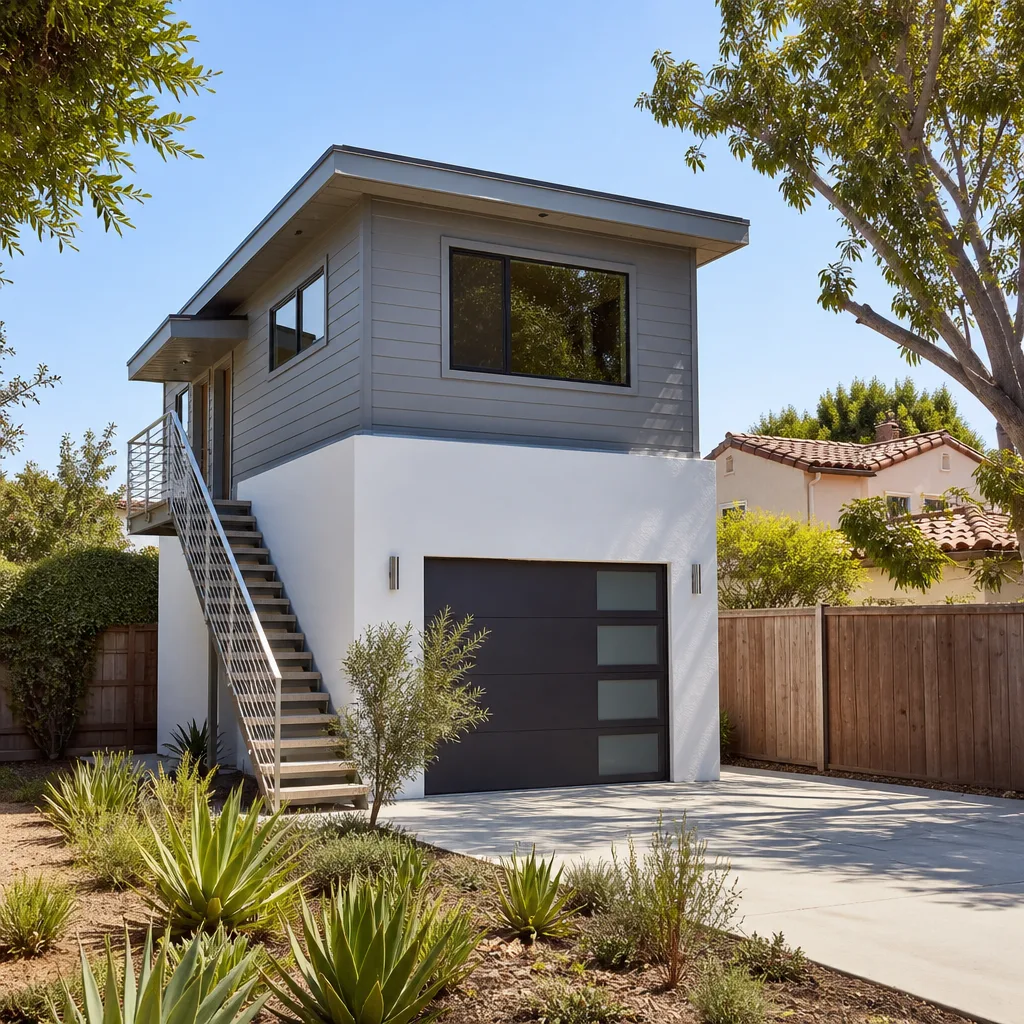
An ADU doubles the buildings you’re responsible for and roughly doubles the emergency scenarios that can catch a household unprepared. The four pieces that close that gap are simple: a photographed, labeled shutoff map covering both structures; interconnected smoke and CO detectors tested on a schedule; a two-structure evacuation plan rehearsed with every occupant including older or mobility-limited residents; and a one-page emergency card with the permit-formatted address in both units. In Paradise, add extreme heat outages, flash flood routes, and WUI fire planning to the mix. None of it is expensive. All of it is fast. Do it on a Saturday before the first heat wave.
If you’re still planning your ADU, our team can walk through these details with you during the estimate. Reach out to our Seedling ADU Builders Paradise home team at (833) 856-4236. Estimates are free, prices are written before any work starts, and every completed job is backed by the 365-Day Done Right Promise.
Written by the team at Seedling ADU Builders Paradise.